Questions to Ask Custom Home Builders Before You Sign

Last Updated: November 12, 2026
Quick Summary
Ask custom home builders about licensing and insurance, how the budget and contract structure work, the realistic timeline and communication process, and what the warranty covers. Request copies of credentials, a written estimate with contingency, and a clear change-order procedure before signing.
Request copies of the contractor license and insurance certificates, not verbal assurances.
Ask which contract type applies: fixed-price, cost-plus, or hybrid, and what each means for your risk.
Require lien waivers with each payment to protect against unpaid subcontractor claims on your home.
Get every change order priced and approved in writing before work begins.
Ask for the warranty in writing and read the exclusions before you commit.
Ready to ask your builder the hard questions?
Vollmer Construction LLC offers free consultations for custom homes, remodels, and outdoor living spaces across Tennessee.
Table of Contents
Why the Questions You Ask Matter as Much as the Builder You Pick
Choosing a custom home builders team is one of the largest financial decisions most families make. The right questions reveal how a builder thinks about budget, schedule, and accountability long before the first shovel hits the ground. Vollmer Construction LLC provides custom home building, remodeling, and outdoor living space design across Tennessee, and the same questions come up in many consultations.
Many homeowners focus on the finished look of a builder's portfolio and overlook the contract terms, communication habits, and cost controls that determine whether the project ends well. A polished showroom says little about how a builder handles a change order in week nine. The questions below are designed to surface those answers early.
Treat each answer as evidence. A builder who speaks clearly about licensing, written budgets, and weekly updates is giving you a preview of how the project will run. A builder who deflects or answers vaguely is giving you information too.
Questions About Experience, Licensing and Insurance
Start with credentials. Ask how long the company has been building in your area, what types of projects it completes most often, and whether it has experience with a custom home of your size and style. When vetting custom home builders, ask for references from recent clients.
Confirm that the builder holds a current contractor license and carries general liability and workers' compensation insurance. Ask for copies, not verbal assurances. A builder who hesitates to share them is a reason to pause.
How to Verify a Tennessee Contractor License
Many residential and commercial construction projects require a license in Tennessee, so confirm the requirement for your project. Look up the contractor's license through the official Tennessee licensing resources, which list license status and classification. Confirm that the name on the license matches the company name on the contract. Check that insurance certificates are current and list your project address or the company as the insured.
Questions to Ask Home Builder About Budget
Budget questions separate a serious builder from one who will surprise you later. Ask for a written estimate that breaks costs into materials, labor, subcontractors, permits, and contingency, and ask how the builder prices overhead and profit. Then go deeper than the estimate itself, the contract structure and payment mechanics determine who absorbs risk when costs move.

Fixed-Price, Cost-Plus, or Hybrid: What Each Means for Your Risk
Ask the builder to state plainly which contract structure it uses and to walk you through a sample.
Fixed-price (stipulated sum). The builder commits to a total price for a defined scope. Your risk is limited to changes you approve, but the builder typically builds in a contingency cushion you never see. Ask what happens if actual costs come in lower than the fixed price, some builders share savings, most do not.
Cost-plus. You pay actual costs plus a stated fee or percentage. This is transparent but exposes you to cost overruns. Ask for a guaranteed maximum price (GMP) if you choose this route, and confirm whether the builder's fee applies to change orders and to its own contingency.
Hybrid. Many custom builders use fixed-price for the base house and cost-plus for site work, selections, or specialty items. Ask which line items fall into which bucket so you know where your exposure sits.
Ask how the builder handles material price escalation. Lumber, windows, and mechanical equipment can move between contract signing and installation. A contract that passes all escalation to you without a cap is a risk; ask for a defined escalation allowance or a shared-cost mechanism.
Draw Schedules, Contingency, and Lien Waivers
Ask how the builder manages the draw schedule, when payments are due and what milestone each payment covers. You can also review custom home and remodeling services to see the work Vollmer offers. A common pattern is a deposit at signing followed by draws tied to foundation, framing, dry-in, rough mechanical, and finishes, with a final payment held until punch-list completion.
Ask how much budget contingency the estimate includes and who approves its use. Ask how much budget contingency the estimate includes, but the important question is control: does the builder need your written approval before drawing on it, and do you receive a credit if it goes unused?
Confirm that lien waivers accompany each payment. A lien waiver is a signed statement from the builder and its subcontractors that they have been paid for work to date. Without one, an unpaid subcontractor can file a mechanic's lien against your property even if you paid the builder in full.
Allowances, Change Orders, and Where Overruns Start
Most budget overruns begin with allowances and change orders. An allowance is a set dollar amount for items you have not yet selected, such as flooring, fixtures, or cabinet hardware. If the allowance is set too low, you will pay the difference later.
A change order is any modification to the original scope. Ask how change orders are priced, whether the builder marks them up, and how long you have to approve them. A builder with a clear change-order process will document each request in writing before work begins and will show you the cost impact first. Ask whether change orders require a signed approval from you and whether the builder will proceed without one.
Finally, ask for a sample monthly budget report. A builder who can show you how costs are tracked against the estimate each month is giving you a preview of how you will learn about overruns, early, or at closing.
The article breaks down the main budget contract structures and what each means for your risk.
Contract type | How it works | Key risk to you |
Fixed-price (stipulated sum) | Builder commits to a total price for a defined scope | Limited to approved changes; contingency is built in |
Cost-plus | You pay actual costs plus a stated fee or percentage | Exposed to cost overruns unless a guaranteed maximum price is set |
Hybrid | Fixed-price base house with cost-plus for site work or selections | Depends on which line items fall into each bucket |
Questions About Schedule, Communication and Project Management
Ask for a realistic construction timeline with key milestones: permitting, foundation, framing, dry-in, rough mechanical work, finishes, and final walkthrough. Ask how the builder tracks progress against that timeline and what happens when weather, supply delays, or inspection backlogs push dates back.
Ask who will supervise the site day to day and how often you will receive updates. Ask how the builder manages subcontractors, including how they are vetted, scheduled, and held accountable for their work.
Finally, ask how the company handles punch lists at the end of the project. A builder with a disciplined close-out process will walk the home with you and document every item before final payment.
Questions About Design Flexibility, Specialty Work and Outdoor Living
Not every builder is equally suited to every project. Ask whether the company designs custom homes from scratch or mainly builds from standard plans with modifications. If you have specific ideas, ask to see examples of similar projects the builder has completed.
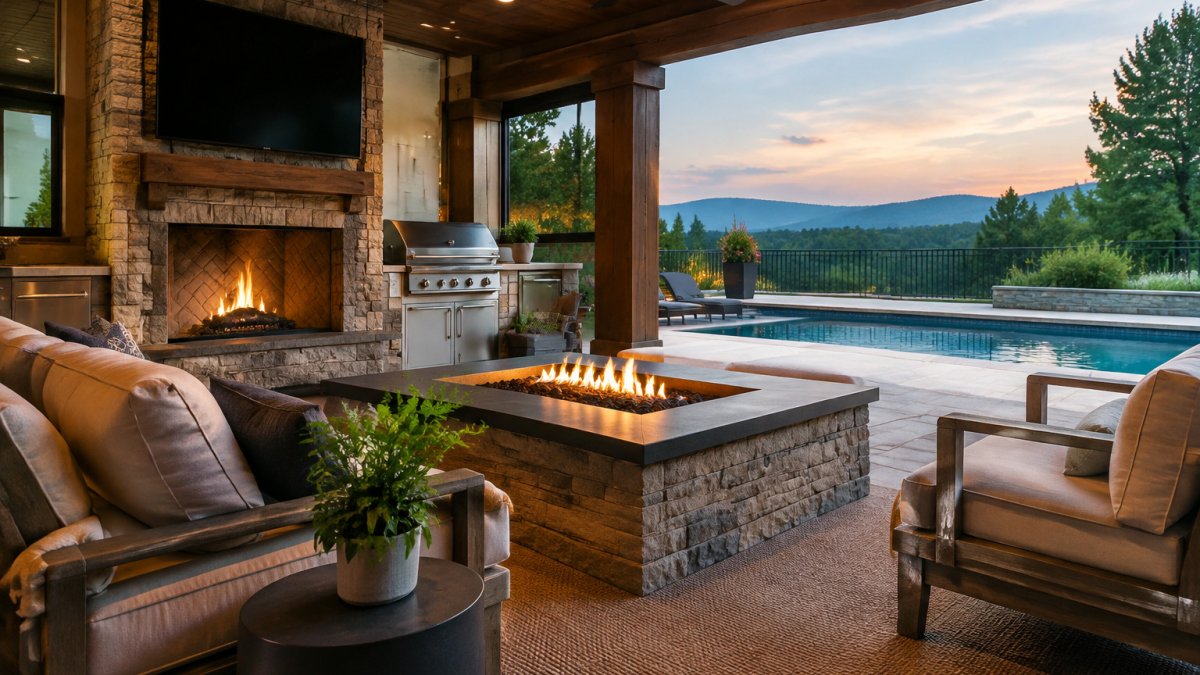
If your plans include specialty work such as outdoor kitchens, screened porches, decks, or patios, ask how much of that work the company performs in-house and how much it subcontracts. You can browse Tennessee outdoor screens to see screened outdoor spaces built by this company. Ask for photos of completed outdoor living projects and whether those clients would take a call. Clarify who handles drainage, structural load requirements, and any building code issues for outdoor structures.
Reviewing the Contract, Warranty and Post-Build Support
Most guides tell you to read the contract. Few tell you what to look for once you do. The contract is where a custom build is won or lost, so treat this review as a financial and legal exercise, not a formality. Consider having a construction attorney review the contract before you sign; many practitioners find a one- to two-hour review is cheap insurance against a five- or six-figure dispute.
Contractual Warning Signs Checklist
Read the scope-of-work section first. It should describe the home in enough detail that a stranger could build it: square footage, room count, material specifications, and included site work. A scope that says "builder-standard finishes" without an attached specification sheet is a blank check.
Then scan for these red flags:
Open-ended price language. Phrases like "cost plus a percentage" with no cap, or "price subject to adjustment" with no defined trigger, shift unlimited risk to you. Ask for a not-to-exceed figure or a defined contingency.
One-sided delay clauses. A contract that penalizes you for delays but excuses the builder for "any cause beyond its control" without a defined list is not balanced. Ask for liquidated damages or a stated remedy when the builder misses the completion date.
Material substitution rights. A clause allowing the builder to substitute "equivalent" materials without your written approval invites value engineering at your expense. Require written approval for any substitution and a credit if the substitute is cheaper.
Vague payment triggers. Payments should be tied to inspected milestones, not calendar dates. A draw schedule that pays a large percentage at signing or before framing is complete is a warning sign.
Missing lien waiver requirement. Every payment should be conditioned on a signed lien waiver from the builder and its subcontractors. Without one, a subcontractor you never hired can file a lien against your home.
Arbitration or venue clauses buried in fine print. These decide where and how you resolve a dispute. Read them before you sign, not after.
No written change-order procedure. If the contract does not state how changes are priced, approved, and documented, assume the process will be informal and expensive.
Watch out: a builder who resists your request for attorney review, or who asks you to sign the same day, is telling you how the rest of the project will go.
Warranty and Post-Build Support: What to Ask
Ask for the warranty in writing and read the exclusions. Warranty terms vary, so read the details carefully rather than relying on the headline. Ask specifically:
What is covered, and what is excluded? Cosmetic issues, settlement cracks, and homeowner-maintenance items are commonly excluded, confirm the list.
How are claims submitted, and what is the response window? A builder who commits to a written response time is more accountable than one who says "we'll take care of it."
Who performs warranty repairs, the builder's own crew or a subcontractor? The answer affects how quickly issues get resolved.
Does the warranty transfer if you sell the home? Transferability adds resale value.
Is there a pre-closing walkthrough and a documented punch list, and is final payment conditioned on completing it?
Ask whether the builder offers post-build check-ins. Request the warranty document alongside the contract so you can compare terms across builders before you commit.
Booking Your Consultation With Vollmer Construction
If you are weighing these questions against a specific project, the next step is a direct conversation. Vollmer Construction LLC offers free consultations for custom home builds, remodels, outdoor living spaces, and commercial work across Tennessee. To get started, use the contact and inquiry page to send your project details. Bring your list of questions, your rough budget range, and any plans or inspiration photos you have collected.
Ask for the same written estimate, timeline, and contract terms described above, and compare them with other builders you interview. The right partner should answer every question directly. Request a quote from Vollmer Construction LLC to start the conversation about your project.
Frequently Asked Questions
What questions should I ask a custom home builder?
Start with experience and licensing, then move to budget, schedule and communication. Ask for references from recent projects similar to yours, and ask who will supervise the job day to day. Confirm the builder carries general liability insurance and workers' compensation, and that the license is active with the appropriate Tennessee licensing authority. Ask how the builder handles change orders and whether allowances are included in the estimate. Finally, ask how often you will receive updates and who your main point of contact will be during construction. Written answers to these questions make it much easier to compare builders fairly.
How do I verify a custom home builder's licensing and insurance?
Ask the builder for their Tennessee contractor license number and look it up through official Tennessee licensing resources. Confirm the license covers the type of work you need, such as new residential construction or commercial work. Request a current certificate of insurance listing general liability and workers' compensation coverage, and ask the insurance company to confirm the policy is active. Verify that the certificate names you as a certificate holder when possible. A licensed, insured builder protects you if an injury or property damage occurs on site.
How do custom home builders handle change orders and budget overruns?
A reputable builder will describe a written change order process before work starts. Each change should list the revised scope, the added cost or credit, and any effect on the schedule, and you should sign it before the work begins. Ask whether the builder marks up subcontractor and material costs on changes, and what that markup percentage is. Also ask how allowances for fixtures, flooring or appliances are handled if your selections cost more or less than the allowance. Clear answers here are one of the best ways to avoid surprise costs halfway through a project.
What is the typical timeline for a custom home build from design to completion?
Timelines depend on design complexity, permit approval, material lead times and weather, so ask any builder for a written schedule with milestones rather than a single completion date. Ask how many active projects they run at once and how they handle delays caused by suppliers or inspections. Request examples of past projects with planned versus actual completion dates. Pricing and timing depend on the scope of each build, so contact Vollmer Construction LLC for a current quote.
Comments